
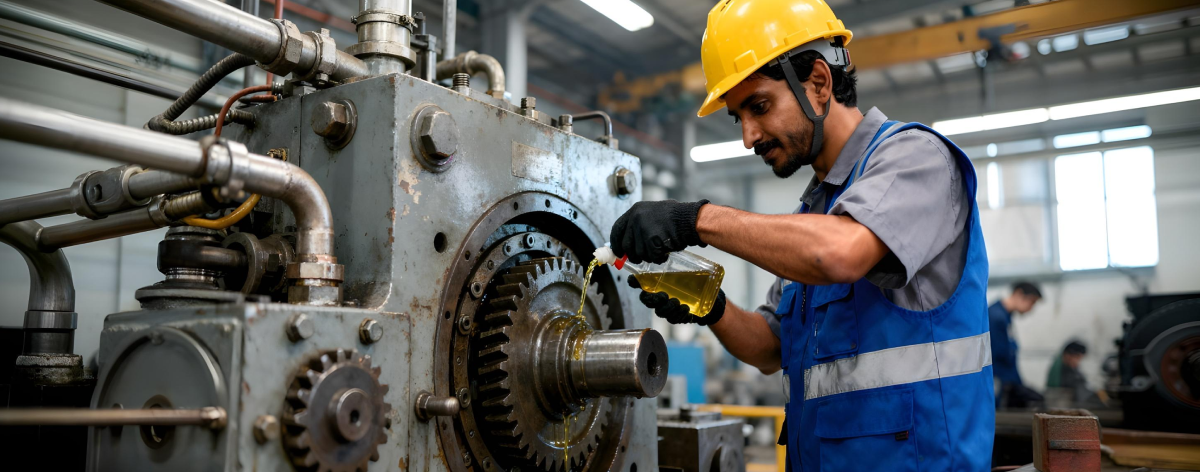
In today’s high-pressure manufacturing environments, unplanned downtime is not just an operational inconvenience; it is a direct hit to profitability. Besides disrupting supply commitments, a single hour of rested production is also likely to delay the delivery and increase the costs of the entire value chain. Even though organizations have been spending heavily on technologically advanced machinery and automation, one crucial aspect that is often overlooked is industrial lubricant oil. Apart from the machinery breakdowns themselves, manufacturing equipment lubrication gone wrong is where a majority of the problems crop up.
For instance, selecting the wrong oil, continued use of deteriorated lubricants, or uneven lubrication practices can lead to an increase in friction, heating of components, and wear-out at a faster rate. Thankfully, these are not problems that are easy to recognize, so they will manifest suddenly with a breakdown after a silent build-up. Plant managers and maintenance engineers are often left fighting the same battle again and again. What should have been reliable machinery starts to show inefficiencies.
Consumption of energy goes up. Maintenance cycles are spread thinner. As a matter of fact, in most instances, the root cause lies in a mismatch of lubricant to machinery or the use of an outdated industrial oil selection guide. What is the real situation here? Lubrication should definitely not be considered simply as a maintenance procedure; it goes a long way in influencing performance.
Using the correct industrial lubricant oil will help the machinery run smoothly and safely, thus lowering breakdowns and supporting continuous production even in the case of intensive use.
When approached strategically, lubrication directly contributes to higher productivity, lower operational costs, and improved equipment lifespan. In an environment where margins depend on efficiency, choosing the right lubricant is not optional; it is essential.
Importance of Industrial Lubrication
Industrial lubricant oil is a major pillar to sustain the performance, reliability, and efficiency of machines that work nonstop on high loads and under harsh conditions in today’s manufacturing. It is not only about lessening friction, but also about allowing the operation of machines to their full capacity as per the design without any break.
The bottom line is that sufficient lubrication for manufacturing machinery helps produce a defensive layer between the parts that are in motion. This layer, more than anything else, prevents the direct metal-to-metal contact, thereby cutting down on friction and wear.
Industrial lubricant also plays the role of a cooling agent. As the machines work fast or under a heavy load, they generate a great amount of heat. A fitting lubricant is capable of transferring this heat away and thus stopping the machine from getting too warm, and at the same time supporting the maintenance of constant working temperatures.
Lubricating also significantly contributes to the improvement of the overall reliability of machines. Regular application of the right lubricant not only diminishes the chance of sudden breakdowns but also enables operation teams to shift maintenance strategies from reactive to planned, leading to more predictable maintenance cycles. Besides merely increasing production time, this approach helps in the better utilization of resources.
In terms of efficiency, systems that are properly lubricated tend to use less energy. Lower friction results in motors and parts needing less power to carry out the same work, thereby leading to quite substantial energy savings across the whole operating facility.
Research in the industry indicates that a large portion of mechanical breakdowns is due to improper lubrication methods, such as wrong oil type, contamination, or lack of proper maintenance. This reinforces the importance of adhering to a well-laid-out industrial oil selection guide and making sure that lubrication methods are in line with the specific characteristics of the machine and its working environment.
In the final analysis, efficient industrial lubrication should not be viewed merely as a maintenance task. On the contrary, it serves as a strategic mechanism for attaining operational excellence, enabling businesses to experience higher levels of productivity, less downtime, and cost efficiency over the long run.
Types of Industrial Lubricant Oils
Choosing the right industrial lubricant oil starts by recognizing the various types of oils and what they are made for. Each type is deliberately built to function in different operating environments and making the choice of the incorrect type can harm the efficiency and the lifespan of the machine. A properly guided selection of industrial oils should always focus on correlating the type of lubricant to the role of the equipment.
Hydraulic Oil
Hydraulic systems represent a key element in many industrial activities, for example, presses and injection molding machines, lifts, and heavy equipment. Industrial hydraulic oil is developed to effectively transfer power, besides its roles in lubrication and cooling.
The oil should be able to keep its viscosity stable despite temperature changes and be able to resist oxidation to deliver steady performance. For the hydraulic system to work optimally, the right hydraulic oil should be used because the wrong one can cause the system to respond slowly, increased wear, and even breakdown.
Gear Oil
Gearboxes, operating at high load and pressure, require industrial-grade gear oil to ensure a protective layer is maintained against wear and damage of gear teeth.
Besides, these oils come with extreme pressure additives that provide the level of protection needed even when the gear is under intense stress.
Using the correct lubricant in machinery with gear systems will guarantee uninterrupted torque transmission, less noise, and extended service time of the equipment.
In contrast, an inappropriate gear oil can cause pitting and scuffing and lead to a prematurely failing gearbox.
Compressor Oil
In the manufacturing industry, air compressors are indispensable, and for them to work efficiently, they need to be lubricated with specialized oils. The main function of these compressor oils is to keep the inside of the system clean, reduce the wear and tear, and minimize the formation of carbon deposits.
Choosing the right oil helps to sustain the compression efficiency, lowers the intervals of maintenance, and keeps the system from overheating. On the other hand, inadequate lubrication may result in valve deposits and a drop in the system’s output.
Turbine Oil
Turbine oils, which are mainly used in turbines and power-generating equipment, need to have excellent oxidation stability and long service life. As these systems often run 24/7, reliability is an important factor.
Top-notch turbine oils do not deteriorate easily, avert the formation of sludge, and guarantee efficient functioning for a long time. Hence, they are indispensable for ensuring continuous production in highly energy-dependent activities.
Circulating Oil
Circulating oils find their application in the lubrication systems, which are centrally controlled and where oil needs to be continuously flown to lubricate different parts simultaneously. Apart from doing the primary function of lubrication, these oils also help in efficient heat transfer and the removal of impurities.
They are really important in vast manufacturing environments where it is necessary to continuously lubricate manufacturing equipment in order to keep the operations going.
Knowing these categories of lubricants enables the managers to make a choice of oil that matches the machine requirements. Instead of treating lubrication as just another input, selecting the correct type of industrial lubricant oil can result in machines performing at their best, with minimum wear and tear, and the least wastage of operational resources in the whole plant.
Key Selection Factors for Industrial Lubricant Oil
Choosing the right industrial lubricant oil is not a simple matter of picking the same product for everyone. Instead, it necessitates having a crystal-clear grasp of the characteristics of the equipment, how the environment in which the machines are used changes, and the desired results in terms of performance over time. Plant managers and procurement teams really have to treat this step as the most important part of any industrial oil selection process because making the wrong choice can result in inefficiencies, higher wear, and unplanned breakdowns.
Viscosity Grade
Viscosity is certainly a key factor in the selection of a lubricant for machinery. It determines the thickness of the oil and has a direct effect on how well the lubricant is able to provide a protective barrier between moving parts.
In case the viscosity is very low, the lubricant might not be able to stop metal surfaces from coming into direct contact with each other, which will result in a rapid increase in wear. On the other hand, if the brushless motor has a very high resistance, then it might result in the generation of a lot of resistance, which ultimately lowers energy efficiency and brings about overheating of the system. Therefore, it is very important to choose the viscosity grade according to the equipment specifications and the operating conditions so that the lubrication performance is at the best level.
Operating Conditions
Industry settings differ greatly, so lubrication requirements must also be adapted to these variations.
Temperature, load, and pressure are among the key elements that influence the choice of a lubricant.
Operations at elevated temperatures necessitate lubricants capable of withstanding thermal stress, whereas applications under heavy loads require lubricants with extreme pressure characteristics.
Systems geared towards using industrial hydraulic or gear oils, capable of enduring these operating conditions, not only ensure performance reliability but also minimize downtime risks.
Environmental Factors
Dusting, moistening, and exposure to chemicals are some of the external conditions that can gradually deteriorate the quality of a lubricant. Among the lubricant failure agents, contamination reigns supreme, especially when dealing with harsh environments.
Maintaining adequate lubrication for production machinery means choosing oils that can effectively resist oxidation, corrosion, and contamination. Sometimes, extra filtering or closed system arrangements might be necessary to ensure the lubricants remain unspoiled.
Compatibility
Not every lubricant can be used together with any materials or oils in the system. Incompatibility may cause chemical reactions, seal damage, or decrease the efficiency of lubrication.
Besides switching or choosing a new industrial lubricant oil, make sure it is compatible with the parts of the machine, seals, and any other lubricants previously used. This is mainly the case with complex systems having multiple lubrication points.
OEM Guidelines
Original Equipment Manufacturer (OEM) instructions should always be considered as the minimum for lubricant selection. These recommendations, based on thorough testing, aim to guarantee maximum machine performance.
Not adhering to OEM specs may result in less efficiency, warranty problems, and increased risk of maintenance. Compliance with these standards means that the selected lubricant for machinery meets the design expectations and operational requirements.
Choosing the right lubricant is a strategic decision that goes beyond the product itself. Taking these aspects into consideration, manufacturers will be able to create a more dependable, efficient, and cost-effective lubrication plan that contributes to their long-term success.
Common Industrial Lubrication Mistakes
Even if manufacturers get access to superior industrial lubricant oil, the majority of production facilities still suffer performance problems mainly because they make lubrication errors that could be avoided.
Actually, those mistakes are usually ignored until they lead to equipment breakdown, escalated maintenance expenses, or production stoppages.
Identifying such mistakes and removing them from the system is very important if one wants to realize the positive impact of proper lubrication on manufacturing operations.
Using Incorrect Viscosity Grade
One of the most frequent mistakes is selecting the wrong viscosity. A mismatch between lubricant viscosity and machine requirements can disrupt the protective oil film.
Low viscosity may lead to increased friction and wear, while high viscosity can restrict flow, reduce efficiency, and cause overheating. This is why every industrial oil selection guide emphasizes strict adherence to recommended viscosity grades.
Over-Lubrication or Under-Lubrication
One of the most frequent mistakes is selecting the wrong viscosity. A mismatch between lubricant viscosity and machine requirements can disrupt the protective oil film.
Low viscosity may lead to increased friction and wear, while high viscosity can restrict flow, reduce efficiency, and cause overheating. This is why every industrial oil selection guide emphasizes strict adherence to recommended viscosity grades.
More lubricant does not always mean better performance. Over-lubrication can cause excess heat buildup, seal damage, and leakage, while under-lubrication leads to inadequate protection and accelerated wear.
Maintaining the correct lubrication quantity is essential for ensuring that the lubricant for machinery performs as intended without creating additional stress on components.
Mixing Incompatible Oils
If you mix different types or brands of oils without checking whether they are compatible, this could cause chemical instability.
As a result, you may get sludge, a decrease in the lubricant effectiveness, and even damage to the system.
If you want to use a new type of industrial lubricant oil, first check the compatibility with the existing oils and materials of the system to avoid problems with performance.
Ignoring Oil Contamination
If you want to use a new type of industrial lubricant oil, first check the compatibility with the existing oils and materials of the system to avoid problems with performance.
One of the biggest causes of lubricant breakdown is contamination with not only dust but also water or metal particles.
When lubricating oil is contaminated, even the best hydraulic oil for industry or gear oil will fail to deliver its intended performance.
If you don’t use filtration and monitoring properly, contaminated oil can do a lot of damage to the system, leading to wear and early equipment failure.
Lack of Scheduled Maintenance
Just relying on reactive maintenance only without lubricating machines on a schedule is another typical mistake. Eventually, lubricants get worse because of heat, oxidation, and getting dirty.
Not changing or testing the oil at the correct times lessens how well it works and can lead to the machine breaking down more often. A planned maintenance schedule keeps the lubrication of production machines regular and gives a higher level of confidence in the equipment’s durability.
Doing away with these frequent mistakes in lubrication can go a long way toward keeping machinery running at peak performance and very effectively extending their working life. In most cases, just by fine-tuning the lubrication-related operations, a company experiences immediate improvements in terms of efficiency, reliability, and control of costs without the need for major capital investment.
Application-Based Recommendations
One of the most effective ways of choosing the correct industrial lubricant is to match it with the exact operating condition. Different industries and factory environments will bring different challenges to the same type of machine. Therefore, tailoring lubrication for factory machinery to its environment would raise the performance, reliability, and cost-saving aspects even further.
Heavy Manufacturing Environments
Metal processing, cement, and mining industries, for example, work with such heavy loads and suffer from the high mechanical stress of their machines. Working with equipment, including crushers, conveyors, and heavy gear systems, necessitates using high-quality and strong lubrication.
In this case, heavy-duty gear oil for industrial use and heavy-duty hydraulic oil for industry containing extreme pressure additives are a must if you want the machines to work properly and at minimum wear. Besides providing a strong protective film that can resist very heavy loads and reduce wear, these lubricants also ensure the normal operating condition of the machinery even under very demanding working conditions.
Continuous Production Plants
Chemical plants, food processing units, and large-scale assembly lines are examples of continuous production plants that can operate 24/7. In such places, little inefficiency might become quite significant very fast.
It is essential to procure lubricant oils that are able to retain their viscosity over a long period of use, and in addition, such oils have low sludge formation and only require minimal maintenance. As a result, production will not be interrupted, and the performance of the plant can be anticipated.
High-Temperature Environments
Steel, glass, and power plants are examples of industries that operate under extreme heat where machines are exposed to very high temperatures, etc. Regular lubricants can become ineffective and deteriorate very fast when exposed to such conditions.
There are equipment lubricants that are heat-resistant and made from synthetic materials that have been recommended. Such high-performance lubricants continue to be effective at high temperatures, avoid oxidation, and provide dependable lubrication to manufacturing machinery even in the most severe thermal conditions.
Moisture and Dust Exposure
Industries like construction, textiles, and outdoor manufacturing often face situations where their products are exposed to dust, water, and other contaminants. These elements can be the main factor that quickly causes the deterioration of the lubricant.
In this situation, the industrial lubricant oil should be selected based on strong anti-corrosion and resistance to contamination properties. Besides, appropriate sealing and filtration systems should be part of the lubricant plan to preserve the oil’s quality and keep the machinery safe.
Manufacturers who consider actual working conditions while choosing lubricants can discard the usual, broad approach and follow a more precise, effective method. This not only enhances the dependability of the machines but also ensures that each lubrication action is a step towards better operational performance and cost savings.
Business Benefits of Proper Industrial Lubrication
Many manufacturing leaders tend to consider lubrication as just another line-item cost. However, the right selection of industrial lubricant oils can have a significant impact on the profitability of a company.
Properly matching lubricants with machine specs and working conditions not only enhances lubrication but also can be quantified as factors contributing to efficiency, reliability, and significantly deferring the cost of ownership over time.
Reduced Machine Downtime
More than anything else, halting production without a planned schedule shoots manufacturing costs sky-high. It is well documented that a lack of or inappropriate lubrication in manufacturing plants is one of the main causes resulting in equipment failures without any warning.
Providing manufacturing plants with the appropriate lubrication has got to be one of the biggest contributors to keeping failure rates at a low level. This is because the use of the right lubricants leads to fewer frequent breakdowns that will be less disruptive. This will be reflected in the greater adherence to production timelines and fewer production interruptions.
Lower Repair and Replacement Costs
Mechanical parts will get damaged faster if they are not continuously and properly lubricated.
As a result of this, a lot of repairs will be needed, and components will have to be replaced earlier than expected.
A properly outlined industrial oil usage manual acts as a safeguard against early destruction by confirming that each machine is functioning at the best lubrication level.
This, in turn, cuts down on the times when maintenance is required and leads to the living till the end of the main assets.
Increased Equipment Lifespan
Your machinery is the asset that you want to keep for a long time. Therefore, it is important to take care of them to maximize their lifespan so that they can continue to generate profit for your business. Among the many factors affecting a machine’s life are the level of friction, the heat generated, and the degradation of the inner parts. All three factors can be significantly minimized with correct lubrication.
One way of extending the lifespan of your machinery without compromising on its performance is by using the proper industrial lubricant oils. This way, your equipment can stay in operation for a longer time, postponing your use of capital to purchase new machinery.
Improved Production Efficiency
Machines that run efficiently are capable of producing a steady flow of outputs.
When the production machinery is lubricated correctly, it is subjected to less force or resistance, it is unlikely to be disrupted, and it is generally in a more stable condition to function.
Such scenarios, in turn, result in an increase in the output and overall productivity.
In a manufacturing setup that produces high volumes, even minor efficiency improvements can result in a significant boost to the output and revenue.
Energy Cost Savings
Mechanical friction causes an increase in energy consumption. If the lubrication is not done properly, then the equipment will require more energy to perform the same operations.
When machinery is well lubricated, the resistance present can be considerably alleviated, which is a good thing since it enables the machines to operate with greater efficiency and, on the other hand, decreases the level of energy consumed. As time goes by, there will be significant cost savings, especially in industries that are highly dependent on energy.
From downtime reduction to energy efficiency improvement, proper lubrication impacts business both immediately and in the long run. For the people making the decisions, spending on the right industrial lubricant oil means more than just maintenance. It means operational excellence on one hand and, on the other hand, a more substantial return on investment.
Maintenance & Best Practices for Industrial Lubrication
To deeply understand its value, companies must make some organizational efforts to discipline their maintenance practices in such a way that would allow the lubricant to perform consistently over time. Since the maintenance efforts will be of the utmost importance, it is highly discouraged and inadvisable to rely only on the quality of lubricants. Besides the risk of failure, on top of that, the inefficiency reduction that comes along with the degradation of the lubricant is something that will ultimately have to be dealt with.
Routine Oil Analysis
One of the best practices that can be implemented is periodic oil testing. It is an indispensable part of an excellent industrial oil selection guide. It helps in determining the condition of the lubricant, the degree of contamination, as well as the level of equipment wear.
Changes in the properties of viscosity, acidity, and particle contamination can be regularly tracked with the help of a team of maintenance technicians who is committed to taking small, efficient steps to safeguard the health of industrial machinery. And, in this way, to them, it would be almost like reading a health indication report. By doing so, they can easily take corrective measures, thus avoiding costly and lengthy disruptions of production. This timely approach allows for the prolongation of oil life as well as the enhancement of the overall lubrication of manufacturing machinery.
Timely Oil Replacement
Over time, lubricants degrade due to heat, oxidation, and contamination. Delaying oil changes can compromise performance and increase wear on machine components.
Establishing a structured replacement schedule based on operating conditions and manufacturer recommendations ensures that the industrial lubricant oil continues to perform effectively. This reduces the risk of unexpected breakdowns and maintains system reliability.
Proper Storage Conditions
Lubricant quality can be compromised even before it is used if storage conditions are not controlled. Exposure to moisture, dust, or extreme temperatures can degrade oil properties.
Storing lubricants in clean, dry, and temperature-controlled environments helps preserve their integrity. Proper labeling and handling practices also prevent cross-contamination and ensure the right lubricant for machinery is used at the right time.
Filtration and Contamination Control
Contamination is one of the leading causes of lubricant failure. Dust, water, and metal particles can quickly reduce the effectiveness of even high-quality hydraulic oil for industry or gear oils.
Implementing effective filtration systems and regular cleaning protocols helps maintain oil purity. This is especially important in harsh industrial environments where contamination risks are higher.
Standardized Lubrication Procedures
Consistency is key to effective lubrication management. Establishing standardized procedures for oil application, monitoring, and replacement ensures uniform practices across the organization.
Clear documentation and training help maintenance teams follow best practices, reducing human error and improving the overall efficiency of lubrication for manufacturing equipment.
By combining the right lubricant with strong maintenance practices, organizations can create a reliable lubrication ecosystem. This not only enhances machinery performance but also supports long-term operational stability and cost efficiency.
Choosing the Right Industrial Oil Supplier
Selecting the right industrial lubricant oil is only part of the equation. Equally important is choosing a supplier who can consistently deliver quality, reliability, and technical expertise. For procurement managers and operations leaders, the supplier plays a critical role in ensuring that lubrication strategies translate into real-world performance.
Proven Industry Experience
A supplier with deep experience across manufacturing sectors brings valuable insights into lubrication challenges and solutions. They understand the nuances of different applications and can recommend the right lubricant for machinery based on real operational scenarios.
Experienced partners are better equipped to support complex requirements, from heavy-duty operations to precision equipment environments.
Quality Certifications and Standards
Industrial lubricants must meet stringent quality benchmarks to perform effectively under demanding conditions. Reliable suppliers adhere to international standards and maintain consistent product quality.
Choosing a certified supplier ensures that the industrial lubricant oil delivers expected performance, reduces risk, and aligns with compliance requirements across industries.
Consistent Product Performance
Variability in lubricant quality can lead to inconsistent machine performance and increased maintenance issues. A dependable supplier ensures uniformity across batches, helping maintain stable lubrication for manufacturing equipment.
Consistency is especially critical in large-scale operations where even minor variations can impact production efficiency.
Technical Consultation and Support
Beyond supplying products, the right partner offers technical expertise. This includes guidance on oil selection, system compatibility, and maintenance practices.
Access to expert consultation helps organizations refine their industrial oil selection guide, troubleshoot issues, and continuously improve lubrication strategies.
Custom Lubrication Solutions
Every manufacturing setup has unique requirements. A strong supplier provides tailored solutions rather than generic recommendations.
Whether it is specialized hydraulic oil for industry, high-performance gear oils, or solutions for extreme environments, customization ensures that lubrication aligns with specific operational goals.
Choosing the right industrial oil supplier is a strategic decision that goes beyond procurement. With the right partner, organizations gain not just products but ongoing support, expertise, and reliability that drive long-term operational success.
Conclusion: Turn Lubrication into a Strategic Advantage
In modern manufacturing, where efficiency, reliability, and cost control define competitiveness, industrial lubricant oil should never be treated as a routine consumable. It is a critical factor that directly influences machine performance, operational stability, and long-term profitability.
From selecting the right lubricant for machinery to implementing structured maintenance practices, every decision in the lubrication lifecycle contributes to overall plant efficiency. When guided by a well-defined industrial oil selection guide, organizations can reduce downtime, extend equipment lifespan, and optimize energy consumption.
The difference between reactive maintenance and high-performing operations often comes down to how strategically lubrication is managed. Businesses that invest in the right lubrication for manufacturing equipment are better positioned to maintain consistent output, control costs, and scale operations with confidence.
Lubrication is not an expense to minimize. It is an investment that delivers measurable returns across the entire production ecosystem.
Optimize Your Industrial Lubrication Strategy
Get expert guidance to choose the right industrial lubricant oil for your machinery and improve performance while reducing downtime.
Frequently Asked Questions
1. How do I choose the right industrial lubricant oil for my machinery?
Choosing the right industrial lubricant oil depends on factors like machine type, viscosity requirements, operating temperature, load conditions, and OEM recommendations. Following a structured industrial oil selection guide ensures optimal performance and prevents premature wear.
2. What happens if I use the wrong lubricant for machinery?
Using the wrong lubricant for machinery can increase friction, cause overheating, accelerate component wear, and lead to unexpected breakdowns. Over time, this results in higher maintenance costs and reduced equipment lifespan.
3. How often should industrial lubricant oil be changed?
The frequency of oil changes depends on operating conditions, machine usage, and oil type. Regular monitoring and oil analysis help determine the right intervals, ensuring effective lubrication for manufacturing equipment without overuse or degradation.
4. What is the difference between hydraulic oil and gear oil in industrial use?
Hydraulic oil for industry is designed for power transmission in hydraulic systems, while gear oil for industrial use is formulated to handle high pressure and protect gear components. Each serves a distinct function and should not be used interchangeably.
5. Why is lubrication important for manufacturing efficiency?
Proper lubrication for manufacturing equipment reduces friction, prevents overheating, and improves machine reliability. This leads to lower downtime, improved productivity, energy savings, and overall cost efficiency in industrial operations.