
In most enterprises, maintenance costs are treated as fixed. Lubrication is treated as routine.
That assumption is where costs begin to rise.
Industrial lubricants are often purchased based on price, not performance. Yet, the choice of industrial lubricant oil directly influences how machines consume energy, how components wear, and how frequently maintenance is required.
When lubrication is not optimized, machines do not fail immediately. They operate inefficiently. Friction increases. Heat builds up. Components degrade faster than expected. These effects are subtle, but they compound across systems and over time.
This is why industrial oils and lubricants should not be viewed as consumables. They are operational levers. The right lubrication strategy can reduce friction losses, extend equipment life, and stabilize performance across production environments.
Enterprises working closely with industrial lubricants manufacturers in India are already shifting this perspective. They are aligning lubrication choices with machine requirements and operating conditions rather than defaulting to standard specifications.
The result is not just better machine performance. It is controlled maintenance, predictable operations, and measurable cost reduction.
The real impact of industrial lubricants is not in what they cost. It is in what they prevent.
Why Industrial Lubricant Oil Directly Impacts Maintenance Economics
Maintenance costs rarely spike overnight. They build gradually through friction, heat, and wear that go unchecked at the microscopic level. This is precisely where industrial lubricant oil plays a decisive role.
Every moving component inside industrial equipment operates under stress. Metal surfaces interact under load, often at high speeds and temperatures. Without the right lubrication, these interactions create resistance, leading to surface damage, material fatigue, and eventual failure.
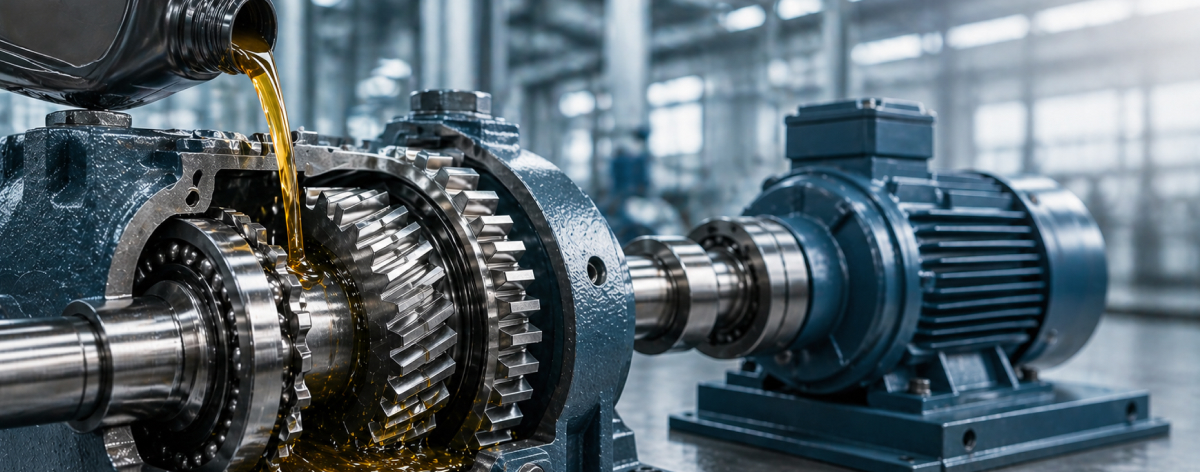
The function of industrial lubricant oil is not limited to reducing friction. It creates a protective film between surfaces, minimizes direct metal-to-metal contact, and stabilizes operating temperatures. It also helps in carrying away contaminants that would otherwise accelerate wear.
When the wrong lubricant is used or when the right lubricant is applied inconsistently, this protective mechanism breaks down. The immediate impact may not be visible, but the long-term consequences are significant. Bearings degrade faster. Gear systems lose efficiency. Hydraulic systems become less responsive. Each of these outcomes contributes to rising maintenance frequency and higher replacement costs.
On the other hand, selecting the right industrial lubricant oil based on load conditions, temperature ranges, and equipment specifications creates a measurable difference. Machines operate smoothly with reduced resistance. Energy consumption remains stable. Component lifespan extends beyond standard expectations.
This is where a structured lubrication strategy becomes critical. It is not just about selecting a product, but about understanding how lubrication interacts with equipment performance. Organizations that invest in this approach often see a reduction in unplanned downtime and a more predictable maintenance cycle.
For enterprises aiming to optimize lubrication practices, resources like Industrial Lubricant Oil provide valuable guidance in selecting the right formulation for different types of machinery and operating environments.
In large-scale operations, even a small improvement in lubrication efficiency can translate into substantial cost savings. When multiplied across multiple assets and production cycles, the impact of choosing the right industrial lubricant oil becomes a strategic advantage rather than a routine decision.
From Reactive Maintenance to Predictable Performance
Most maintenance strategies are built around response. A component fails, a system slows down, or performance drops below acceptable levels, and only then does intervention begin. This reactive approach not only increases costs but also creates operational uncertainty.
Lubrication has the potential to shift this model entirely.
When industrial lubricants are selected and managed strategically, they enable a transition from reactive maintenance to predictive control. Instead of waiting for visible signs of wear, lubrication becomes a tool to stabilize machine behavior from the start. Friction levels remain controlled, heat generation stays within limits, and component stress is significantly reduced.
This consistency allows maintenance teams to move away from emergency fixes and toward planned interventions. Equipment performance becomes more predictable. Maintenance schedules become data-driven rather than assumption-based. Downtime is minimized because the conditions that lead to failure are already being managed.
Industrial oils and lubricants, when aligned with operating conditions, also improve system reliability across interconnected processes. A single well-lubricated component reduces strain on adjacent parts, creating a ripple effect of efficiency across the entire system.
Organizations that embed lubrication into their broader maintenance strategy often find that they are not just reducing costs. They are improving operational confidence. Production targets are met more consistently. Resource allocation becomes more efficient. Most importantly, maintenance stops being a disruption and starts becoming a controlled function.
This is the difference between managing breakdowns and engineering performance.
How the Right Lubrication Strategy Extends Equipment Life
Equipment lifespan is often treated as a fixed outcome, defined by manufacturer specifications and operating hours. In reality, how long a machine lasts is heavily influenced by how well it is maintained, and lubrication sits at the center of that equation.
Industrial lubricants play a critical role in protecting components from continuous stress. In high-load environments, parts such as gears, bearings, and compressors are exposed to constant pressure and temperature variation. Without effective lubrication, these conditions accelerate wear, leading to early degradation and frequent replacements.
A well-matched industrial lubricant oil forms a stable film that absorbs shock, distributes load evenly, and prevents direct surface contact. This significantly reduces the rate at which components deteriorate. It also protects against oxidation, corrosion, and contamination, all of which contribute to long-term damage.
What separates a basic lubrication approach from a strategic one is alignment. The viscosity of the lubricant, its thermal stability, and its resistance to breakdown must match the operating conditions of the equipment. Using a generic solution across different machines often leads to inconsistent performance and uneven wear patterns.
This is where enterprises begin to see the value of working with experienced industrial lubricants manufacturers in India. These partnerships provide access to specialized formulations designed for specific applications, whether it is high-speed machinery, heavy-load systems, or temperature-sensitive operations.
Over time, the impact of the right lubrication strategy becomes measurable. Equipment requires fewer repairs. Replacement cycles are extended. Maintenance teams spend less time on corrective actions and more time on optimization.
When industrial oils and lubricants are treated as a core part of asset management, they do more than support operations. They actively extend the usable life of equipment, turning maintenance from a recurring expense into a long-term investment in performance.
The Direct Link Between Lubrication and Energy Efficiency
Energy costs are one of the largest operational expenses in industrial environments, yet they are rarely connected to lubrication decisions. This disconnect leads many organizations to overlook a critical opportunity for cost optimization.
At a fundamental level, energy loss in machinery is largely driven by friction. When moving parts encounter resistance, more power is required to maintain output. This additional energy consumption may appear marginal at the machine level, but across an entire facility, it becomes a significant cost driver.
This is where industrial lubricants make a measurable difference.
The right industrial lubricant oil reduces internal resistance by creating a smooth interaction between surfaces. It ensures that machines operate with minimal friction, allowing them to achieve the same output with lower energy input. In high-speed or high-load operations, this efficiency gain becomes even more pronounced.
On the other hand, poor lubrication increases drag within the system. Machines compensate by consuming more power, generating excess heat, and operating under greater stress. Over time, this not only raises energy bills but also accelerates wear, creating a dual cost impact.
Industrial oils and lubricants also contribute to thermal stability. By effectively dissipating heat, they prevent energy losses associated with overheating and reduce the need for additional cooling mechanisms. This further enhances overall system efficiency.
Organizations that optimize lubrication often observe a consistent reduction in energy consumption across equipment. While the percentage improvement per machine may seem small, the cumulative savings across multiple systems and continuous operations can be substantial.
For enterprises evaluating long-term cost structures, lubrication should not be viewed in isolation. It is directly connected to energy efficiency, operational stability, and maintenance frequency. When managed strategically, industrial lubricants become a lever that not only protects equipment but also lowers the cost of running it every single day.
Reducing Unplanned Downtime Through Smarter Lubrication
Unplanned downtime is one of the most expensive disruptions in any industrial operation. It affects production schedules, impacts delivery commitments, and often leads to cascading inefficiencies across the value chain.
What makes downtime particularly challenging is that it is rarely caused by a single failure. In many cases, it is the result of gradual wear, overheating, or contamination that builds up over time. These are precisely the conditions that effective lubrication is designed to control.
Industrial lubricants act as a first line of defense against the factors that trigger unexpected breakdowns. A high-quality industrial lubricant oil maintains a consistent protective layer between moving parts, reducing friction and preventing sudden mechanical stress. It also helps in sealing out contaminants such as dust, moisture, and debris that can compromise internal components.
When lubrication is inconsistent or poorly matched to operating conditions, these protective functions weaken. Components begin to degrade without clear warning signs. Systems that once operated smoothly start showing variability, eventually leading to unexpected stoppages.
On the other hand, a well-defined lubrication strategy introduces stability into operations. Machines run within optimal parameters. Wear patterns become predictable. Maintenance teams can identify potential issues early and intervene before they escalate into failures.
Industrial oils and lubricants, when integrated into a broader maintenance framework, also support condition-based monitoring. Changes in lubricant quality, temperature, or viscosity can serve as early indicators of underlying issues, enabling proactive decision-making.
Organizations that collaborate with reliable industrial lubricant manufacturers in India often benefit from advanced formulations and technical support that further strengthen downtime prevention strategies.
The outcome is clear. Fewer disruptions, better production continuity, and a more resilient operational environment.
Choosing the Right Partner for Long-Term Lubrication Success
Selecting the right lubricant is only one part of the equation. Sustained cost reduction and performance improvement depend on choosing the right partner who understands both product formulation and application strategy.
Many organizations focus on product specifications but overlook the value of technical expertise. Industrial environments are complex. Equipment varies in load, speed, temperature, and exposure to contaminants. A one-size-fits-all approach to industrial lubricants often leads to inconsistent outcomes.
This is why working with experienced industrial lubricants manufacturers in India becomes a strategic decision rather than a procurement task.
The right partner goes beyond supplying industrial lubricant oil. They assess operating conditions, recommend application-specific solutions, and guide maintenance teams on optimal usage practices. This includes selecting the correct viscosity, defining lubrication intervals, and ensuring compatibility across different equipment types.
In addition, established manufacturers invest in research and development to create advanced industrial oils and lubricants that perform under demanding conditions. These formulations offer better thermal stability, oxidation resistance, and longer service life, all of which contribute to reduced maintenance requirements.
Another critical factor is consistency. Reliable partners ensure uniform product quality, which is essential for maintaining predictable machine performance. Variations in lubricant quality can lead to fluctuating results, making it difficult to control maintenance cycles.
Over time, the relationship with the right manufacturer evolves into a performance-driven collaboration. Instead of reacting to issues, organizations gain access to insights, technical support, and continuous improvement opportunities.
For enterprises aiming to reduce maintenance costs at scale, the choice of partner is just as important as the choice of product. The right collaboration transforms lubrication from a routine activity into a structured, value-driven strategy that supports long-term operational efficiency.
Building a Scalable Lubrication Strategy Across Operations
For many enterprises, lubrication practices evolve organically. Different plants follow different schedules. Maintenance teams rely on experience rather than standardized protocols. Over time, this creates inconsistency in how industrial lubricants are applied across the organization.
While individual machines may perform adequately, the overall system lacks uniformity. This inconsistency leads to uneven wear, unpredictable maintenance cycles, and difficulty in identifying performance benchmarks.
A scalable lubrication strategy addresses this challenge by bringing structure and standardization into the process.
It begins with mapping equipment requirements across facilities. Each machine is evaluated based on load conditions, operating environment, and performance expectations. Based on this, the right industrial lubricant oil is selected for each application rather than applying a generic solution across systems.
The next step involves defining clear lubrication intervals and methods. This ensures that industrial oils and lubricants are applied consistently, reducing the risk of over-lubrication or under-lubrication, both of which can negatively impact performance.
Technology also plays a critical role. Many organizations are integrating monitoring systems that track lubricant condition, temperature, and equipment performance in real time. This data-driven approach allows maintenance teams to move beyond fixed schedules and adopt condition-based lubrication practices.
Standardization further extends to supplier alignment. Partnering with trusted industrial lubricants manufacturers in India helps ensure consistent product quality across locations, simplifying procurement and improving reliability.
Training and process documentation complete the strategy. When maintenance teams follow clearly defined guidelines, the margin for error reduces significantly, and best practices can be replicated across operations.
The outcome is not just improved machine performance at an individual level. It is operational consistency at scale. Maintenance becomes predictable, costs become controllable, and the entire organization benefits from a unified approach to lubrication.
In large industrial setups, scalability is what turns small efficiency gains into significant financial impact.
Measuring ROI from Lubrication Optimization
For many organizations, lubrication improvements are implemented but rarely quantified. Without clear measurement, it becomes difficult to justify strategic investment or scale best practices across operations.
To fully realize the value of industrial lubricants, enterprises need to track performance through defined metrics that connect lubrication directly to business outcomes.
The most immediate indicator is maintenance frequency. When the right industrial lubricant oil is used consistently, the number of corrective maintenance interventions begins to decline. Fewer breakdowns translate into lower labor costs and reduced spare part consumption.
Equipment lifespan is another critical metric. Components such as bearings, gears, and hydraulic systems last longer under optimal lubrication conditions. This extends replacement cycles and reduces capital expenditure over time.
Energy consumption also provides measurable insight. Efficient lubrication minimizes friction, allowing machines to operate with lower power input. Even a small percentage reduction in energy usage across multiple assets can result in significant cost savings at scale.
Downtime reduction is often the most visible benefit. Tracking unplanned stoppages before and after lubrication optimization highlights the direct impact on production continuity. More uptime means higher output and improved revenue consistency.
Oil analysis and condition monitoring further strengthen measurement. By evaluating the performance of industrial oils and lubricants over time, organizations can detect contamination, degradation, and wear patterns early. This data enables more precise maintenance planning and avoids unnecessary lubricant changes.
Enterprises that collaborate with leading industrial lubricants manufacturers in India often gain access to technical support and analytics that make this measurement process more structured and actionable.
Ultimately, the return on investment from lubrication is not theoretical. It is reflected in reduced maintenance costs, improved efficiency, and longer asset life. When tracked effectively, industrial lubricants move from being an operational expense to a measurable contributor to profitability.
Conclusion
Maintenance costs are not just a function of equipment age or usage intensity. They are largely shaped by how effectively machines are supported in their day-to-day operation. Among all the variables that influence this, industrial lubricants remain one of the most underutilized levers for cost control.
From reducing friction and managing heat to preventing wear and extending component life, the impact of the right industrial lubricant oil is both immediate and long-term. It stabilizes performance, improves energy efficiency, and minimizes the risk of unplanned downtime.
What differentiates high-performing organizations is not just the products they use, but the strategy they build around them. Treating industrial oils and lubricants as a core part of maintenance planning allows enterprises to move from reactive problem-solving to predictable, optimized operations.
For businesses evaluating industrial lubricant manufacturers in India, the focus should remain on long-term value, technical alignment, and consistency. Because the true benefit of lubrication is not in short-term savings, but in sustained operational efficiency and reduced lifecycle costs.
In an environment where margins are constantly under pressure, the ability to control maintenance expenses without compromising performance becomes a competitive advantage. And in many cases, that advantage begins with making the right lubrication decisions.
Reduce Costs. Improve Performance. Scale Efficiency.
Build a smarter lubrication strategy with the right products and expertise to minimize maintenance costs and maximize equipment life.
Frequently Asked Questions
How do industrial lubricants reduce maintenance costs?
Industrial lubricants reduce friction, prevent wear, and control temperature within machinery. This
minimizes component damage, reduces breakdowns, and lowers the frequency of maintenance interventions.
Why is choosing the right industrial lubricant oil important?
The right industrial lubricant oil ensures compatibility with equipment, operating conditions, and load requirements. This leads to better efficiency, longer equipment life, and fewer unexpected failures.
How often should industrial lubricants be changed?
Lubricant change intervals depend on usage, environment, and equipment type. Condition-based monitoring and oil analysis are recommended to determine the optimal replacement cycle.
Can lubrication impact energy consumption in industrial equipment?
Yes, proper lubrication reduces friction, allowing machines to operate with less resistance. This lowers energy consumption and improves overall operational efficiency.
What should I look for in industrial lubricant manufacturers in India?
Key factors include product quality, technical expertise, consistency, and the ability to provide application-specific solutions tailored to your machinery and operating conditions.